
England: The Thames Path National Trail May 2022.
Landing In London
Gleefully, we landed in London on May 6th from Seattle without a hitch! There were no strikes, no baggage issues, no covid issues, no delays, no missing reservations, no double-booked seats, no surprises: the journey was a delightfully simple execution of a straightforward plan.
Bill had practically willed this trip overseas to happen with his obsessive research about covid infection rates, a trip which was the resumption of our annual European holidays tabled for 2 years because of the pandemic. I wasn’t willing to take the emotional risk of putting much effort into the trip, but he was, and he did it all. Thank you, Bill! We both were granted our wishes: his was to travel abroad; mine was to hike this summer without breathing wildfire smoke.
Bill booked fully refundable, roundtrip tickets for us to London in early March because the UK was going ‘reckless’ with its covid rules, vastly reducing the financial exposure to travelers planning a trip. Italy was where we wanted to be, but their covid infection rates were still high and their restrictions on travelers were both baffling and in a constant state of flux. We weren’t willing to gamble any time or money on summer travel in Italy, whereas we were on England.
In addition to benefitting from Bill’s hard work, we were very lucky on 2 other counts: we were able to receive our 4th anti-covid vaccine before we flew to London and, a month after booking our flights, Italy stabilized their rules for travelers. We then immediately booked 6 weeks of refundable lodging at the end of our trip in the Italian Alps before we left home, which would be the icing on the cake for the master plan. That was Bill’s hoped-for contingency plan: we would tread water in England for months to be poised to travel to the more dramatic Alps on short notice.
Our trip planning luck held once overseas, and on June 10th, the US announced the negative covid test requirement to re-enter the US would be dropped in 2 days and was basically guaranteed to hold for 90 days. This welcome new rule would give us a 2-day buffer after we had (hopefully) flown home in early September. However, the evolving wildcard was equally scary, which was that because of staffing shortages, airlines were currently cancelling flights within 1 hour of departure time. Yikes!
Launching from Swindon, England
Maybe in my next life, I should come back as a tourist property ‘proofer,’ someone who highlights problems for the owners or managers before the guests ask: “What were they thinking?”
Landing In London
Gleefully, we landed in London on May 6th from Seattle without a hitch! There were no strikes, no baggage issues, no covid issues, no delays, no missing reservations, no double-booked seats, no surprises: the journey was a delightfully simple execution of a straightforward plan.
Bill had practically willed this trip overseas to happen with his obsessive research about covid infection rates, a trip which was the resumption of our annual European holidays tabled for 2 years because of the pandemic. I wasn’t willing to take the emotional risk of putting much effort into the trip, but he was, and he did it all. Thank you, Bill! We both were granted our wishes: his was to travel abroad; mine was to hike this summer without breathing wildfire smoke.
Bill booked fully refundable, roundtrip tickets for us to London in early March because the UK was going ‘reckless’ with its covid rules, vastly reducing the financial exposure to travelers planning a trip. Italy was where we wanted to be, but their covid infection rates were still high and their restrictions on travelers were both baffling and in a constant state of flux. We weren’t willing to gamble any time or money on summer travel in Italy, whereas we were on England.
In addition to benefitting from Bill’s hard work, we were very lucky on 2 other counts: we were able to receive our 4th anti-covid vaccine before we flew to London and, a month after booking our flights, Italy stabilized their rules for travelers. We then immediately booked 6 weeks of refundable lodging at the end of our trip in the Italian Alps before we left home, which would be the icing on the cake for the master plan. That was Bill’s hoped-for contingency plan: we would tread water in England for months to be poised to travel to the more dramatic Alps on short notice.
Our trip planning luck held once overseas, and on June 10th, the US announced the negative covid test requirement to re-enter the US would be dropped in 2 days and was basically guaranteed to hold for 90 days. This welcome new rule would give us a 2-day buffer after we had (hopefully) flown home in early September. However, the evolving wildcard was equally scary, which was that because of staffing shortages, airlines were currently cancelling flights within 1 hour of departure time. Yikes!
Launching from Swindon, England
Maybe in my next life, I should come back as a tourist property ‘proofer,’ someone who highlights problems for the owners or managers before the guests ask: “What were they thinking?”
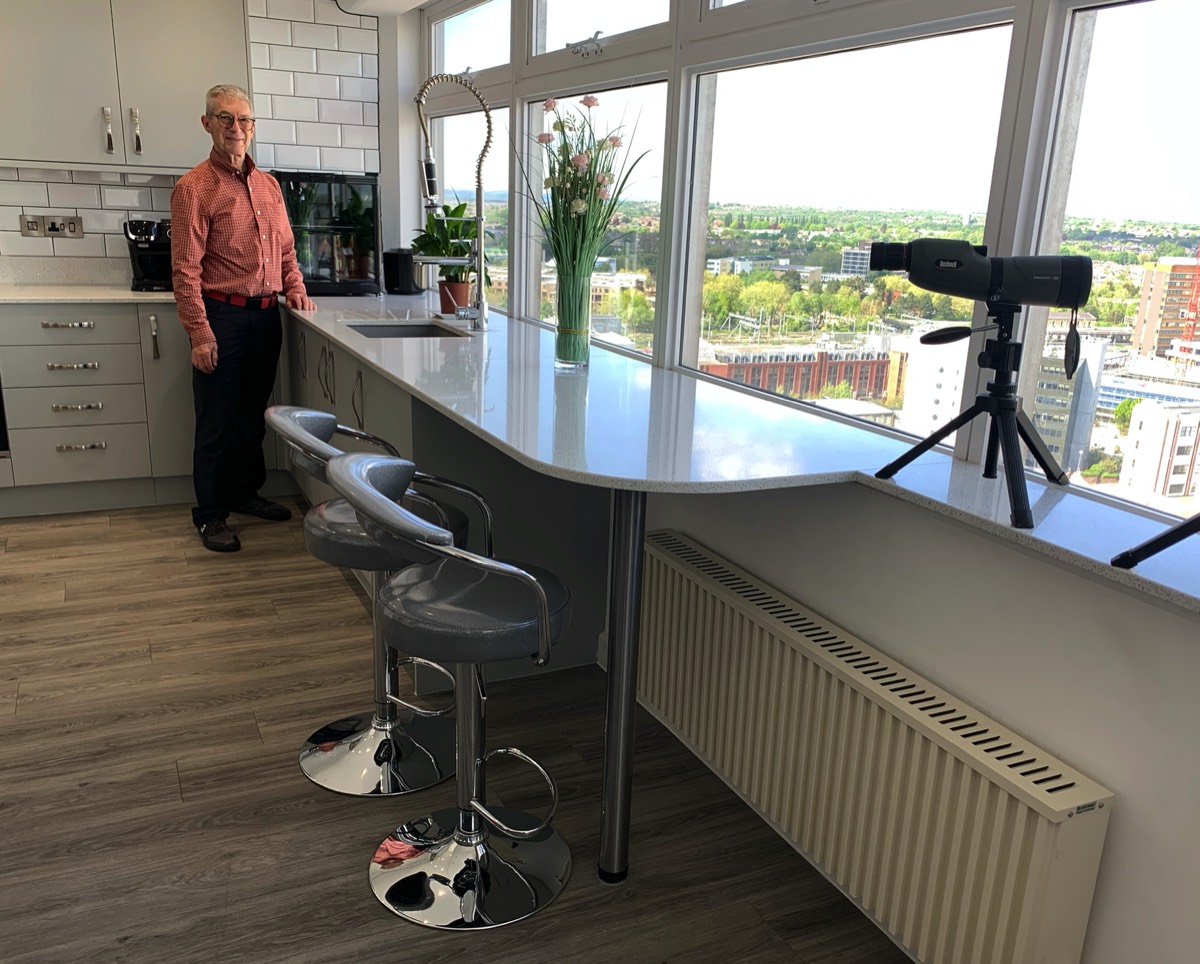
The flashy kitchen in our upscale, Swindon apartment.
The giant, handsome, clawed bathtub felt like a Siren call because the hot water tank only provided enough water to submerge my knees with my legs out straight. Had it not been for the little electric space heater we pack; the tub would have been completely useless because the unheated apartment was too cold for such shallow bathing. The lack of heat and sketchy hot water were major obstacles to the pleasure of our first days there, but there were plenty of other head scratchers for a “proofer” to discover.
The apartment owners provided 4 wine glasses but no corkscrew and a single champagne flute—hmmm? Neither shortcoming mattered to us, but we noticed the inattentiveness to niceties that surely frustrated others. The cheap, mismatched flatware seemed inconsistent with the word “luxury” in their property name. The scratched, budget, non-stick cookware revealed the obvious: there were no suitable utensils for the delicate pan surfaces. And gosh, we had to wonder everyday about the fire exit door marked with “No access to street”.
I’m amazed by how many tourist apartments with partial or full kitchens leave us wondering “What were they thinking?” The mini-kitchen the night before arriving in Swindon, near Heathrow Airport, was charming with an impressive basket of assorted cooking utensils but no flatware--there was absolutely nothing with which to eat. Then there was the lovely Italian apartment where we stayed many times with a ceramic cooktop but not a single pot in the cabinet that didn’t have a severely warped bottom.
Too often, there is nowhere to put our duffle bags. Even at our Seattle airport hotel, which provided a rare, welcome luggage rack, we could not have a 2nd one when we asked. Really?? In some places, we move furniture to clear floorspace for our bags; other times we evaluate the sturdiness of coffee tables, foot stools, and other smaller items for supporting our often 50-pound bags. Rarely, do we walk into a new space and find suitable furniture for our 2 pieces of luggage that are at back-friendly heights for accessing our gear, usually at least half of which remains stowed for a later adventure
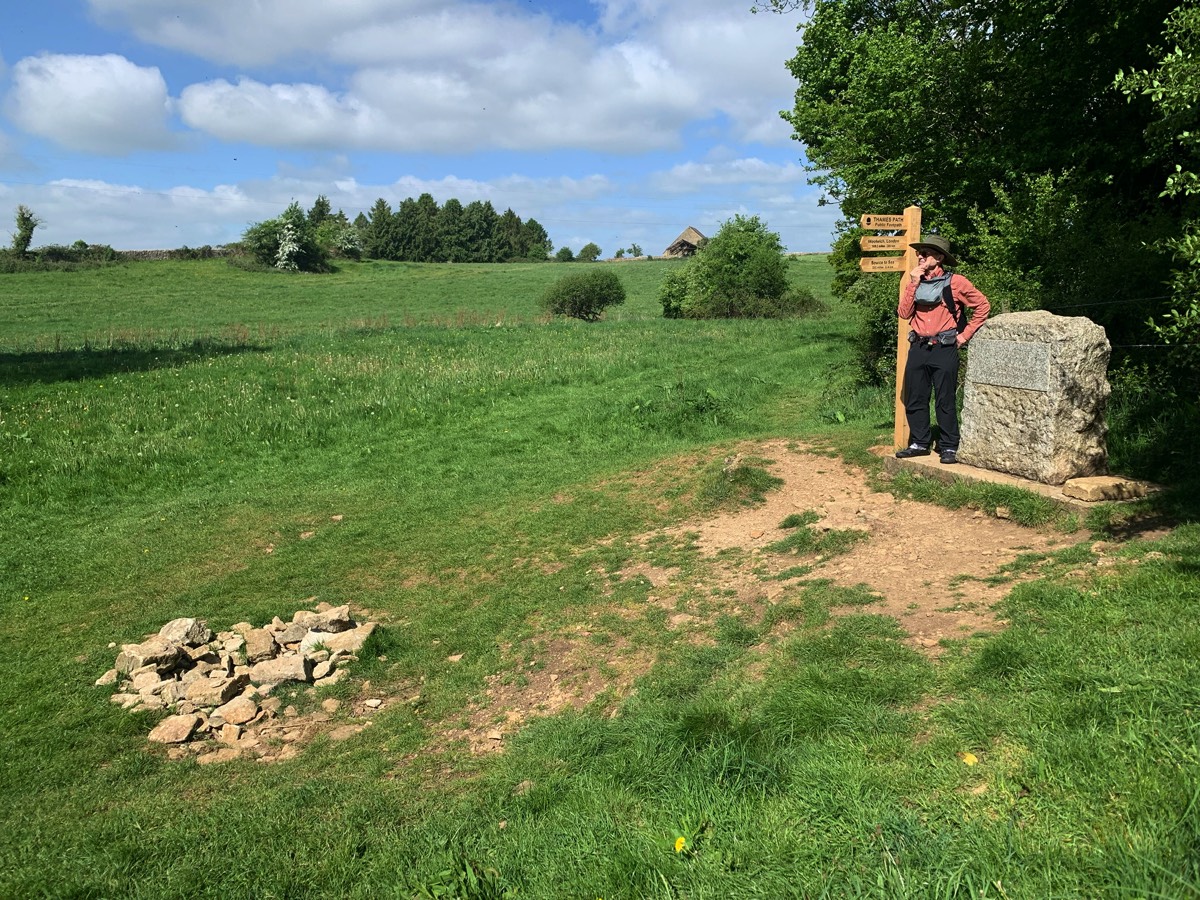
We presumed that the dry stone circle was the official source of the Thames River.
We, however, are experienced travelers who are determined to have what we want, and we come prepared to get it. Making a fuss with owners or managers has never been rewarding, like when we asked for heat in our room when we were drenched from biking in the rain. The host rudely laughed, saying the heat wouldn’t be back on for months. We wrapped ourselves in our sleeping bags to shake the chill but that didn’t help dry our clothes, hence the portable heater ever since. (Yes, we always carried the portable heater on our bike tours too.)
We always pack a few laundry and dishwasher detergent pods in case we have a place with the welcome equipment. We carry strong dish detergent and a 2-sided sponge; a large, ultra-thin cutting board; a folding knife; a tiny pocket can opener; Lexan tablespoons as our only utensils for lunch on the trail or to use indoors; silicon or similar food storage bags for lunch and planned leftovers; either a small electric cook pot or camping-grade microwaveable dishes; and a tiny kitchen scale. Our gear is selected for low toxicity, high durability, light weight, and packability.
Whether we have no kitchen or a full kitchen with gaps, we can do food prep and eat the way we want anywhere we go, but it does seem silly to always be dipping into our humble stash in luxury apartment kitchens. In addition to covering our culinary needs, we tote a USB-connection bedside fan; a short, elasticized clothesline; a large and small drain plug; and a quick-drying travel towel for hand washed laundry to have comfort on our terms.
Unfortunately, the viscose travel towel came in handy for towel drying our hand washed underwear in Swindon. Bill bought-up for all our reserved lodging this year, in part to secure clothes washing machines in our longer-stay apartments, but this first washer was completely non-functional. The owner checked on it, their installer pulled it out of the built-in cabinet, and finally, a service man dropped by, to no avail. By 12 days on the road, we resigned ourselves to only washing our quick-drying travel underwear because even they required days to dry in the damp, unheated apartment. We settled for wearing shirts and socks 4 times without washing them.
And so, it would go, with stepping into each new upscale apartment this summer, we would hear ourselves asking: “What were they thinking?”
Commingling the Ancient Past with the Recent Past & the Present
“Just because it is old doesn’t mean it was ever good,” were my mother’s words that still echo in my mind, whereas Bill’s mother revered old things because they were old. I know many Americans are like Bill’s mom and love “Old Europe” because of how old things are, whereas I am enchanted by the incredible mix of centuries and millennia represented there. Unlike the US, Europe’s and the UK’s ancient history is everywhere, and I appreciate the humbling of frequently being reminded of all those who came before me and being prompted to ponder their journeys.
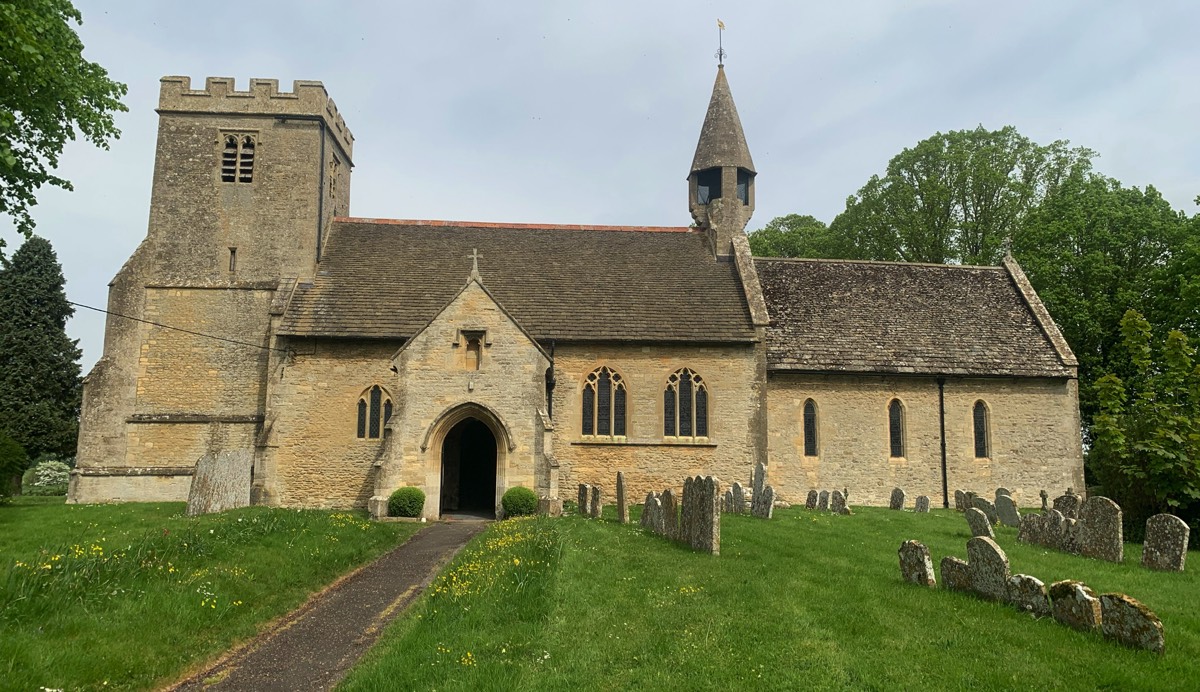
One of several 12th century Norman churches along the way.
A few hours later, we saw a steeple rising above the river path’s deciduous tree canopy and Bill interjected that it was our destination village for the day, Lechlade. We had noted the sudden appearance of canal boats, and lots of them, in the Thames that had only accommodated a canoe earlier in the day. The welcome historical signboards educated us about the long history of the shipping industry in Lechlade, which like today, is as far upstream that canal boats can navigate. Canal boats always pique our interest, but it was the giant, low-flying, bomber-like aircraft again in the sky that became our big story for the day.
Bill’s knowledge of all sorts of heavy craft had aided him in immediately identifying the planes as post-WWII-era cargo planes and we surmised that they were carrying supplies to Ukraine. We’d seen them for hours and, when we stopped to study the skies, there were always 2 or 3 of them in sight, going in 2 directions at low elevations.
A bit of online reading from the trail revealed that the US had sent B-52 Stratofortress bombers from North Dakota to the nearby Fairford military base, and other bases, beginning February 10 in anticipation of the Russian invasion of Ukraine. We learned that Fairford is the largest US-owned base in the UK or Europe and is the only one in the greater region that has unlimited weight capacity on its tarmacs. It even had been outfitted with the needed resources to be an emergency landing area for the Space Shuttle. Interestingly, Google maps had erased the Fairford airbase from its maps, but Bill was able to locate it, and its name, from his Gaia navigation app.
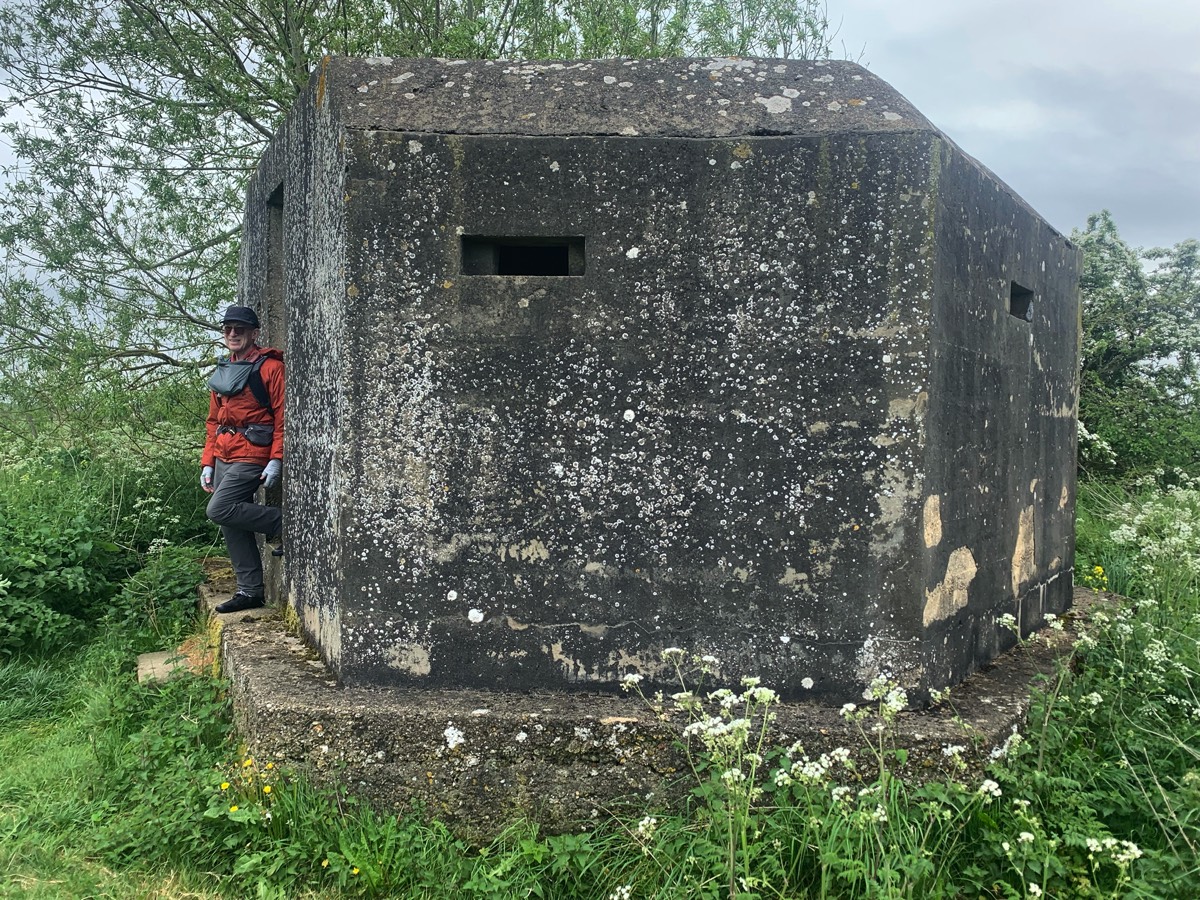
WWII pill box fortifications were still scattered along the river’s edge.
Throughout our stay in England, we were touched by seeing numerous Ukrainian flags flying from homes and boats, as well as Ukrainian flag decals displayed in residential windows. In one public park along the Thames, we saw 1 white “Z” anonymously painted on a tree trunk by a prankster or Russia supporter.
Swindon’s Past
A few days after seeing the monstrous transports overhead, I burst out laughing when the dog owner on the river path said “Oh, you poor people!” when we answered “Swindon” to his question “Where are you staying?” Interpreting the downtown scene in Swindon, our first hub town on our hub-and-spoke walking tour along the Thames River, had been a head scratcher, but his energetic reaction added mountains of clarity to the situation.
Our 15th story apartment in the 19-story building built in 1976 was awkwardly the tallest building in town and the panorama from the dramatic wall-of-windows was of too many derelict buildings, perhaps from the same era. Wikipedia didn’t add clarity about the buildings or the forlorn, idle, middle-aged men drinking beer and smoking cigarettes all day long in the adjacent pedestrian mall. Wiki’s piece seemed to be from about 2007 or 2008 and stated that Swindon had one of the highest per capita incomes in the country and had good values for home buyers. The statistics didn’t compute with what we observed, and the walker’s disjointed comments were validating of our conclusions, but not clarifying, about Swindon’s presumed most recent boom and bust cycle.
However, Swindon’s heyday, beginning in the mid-1840’s was made perfectly clear at “Steam: The Great Western Railway” museum in town. The heavy rain after logging 32 miles of walking in 3 days along the Thames encouraged a welcome rest day and the museum gave the day a focal point that made Swindon’s past quite clear: it had been a major railroad town until the nationalization of the system in 1948 and the complete closure of the city’s railroad works in 1986.
The Railway Museum didn’t address the recent “What happened?” story about Swindon, but it did feed Bill’s lifelong passion for trains, as well as planes and vehicles. When I paused for a rest on a museum bench, he commented upon how unusually large the wheels were on the engine featured in front of us, comparing the typical wheel sizes of engines pulling passenger cars with those pulling cargo cars and those in the US with those in England. He knew his stuff. I however, despite visiting numerous train museums with him over the last 20 years, had a more simple experience.
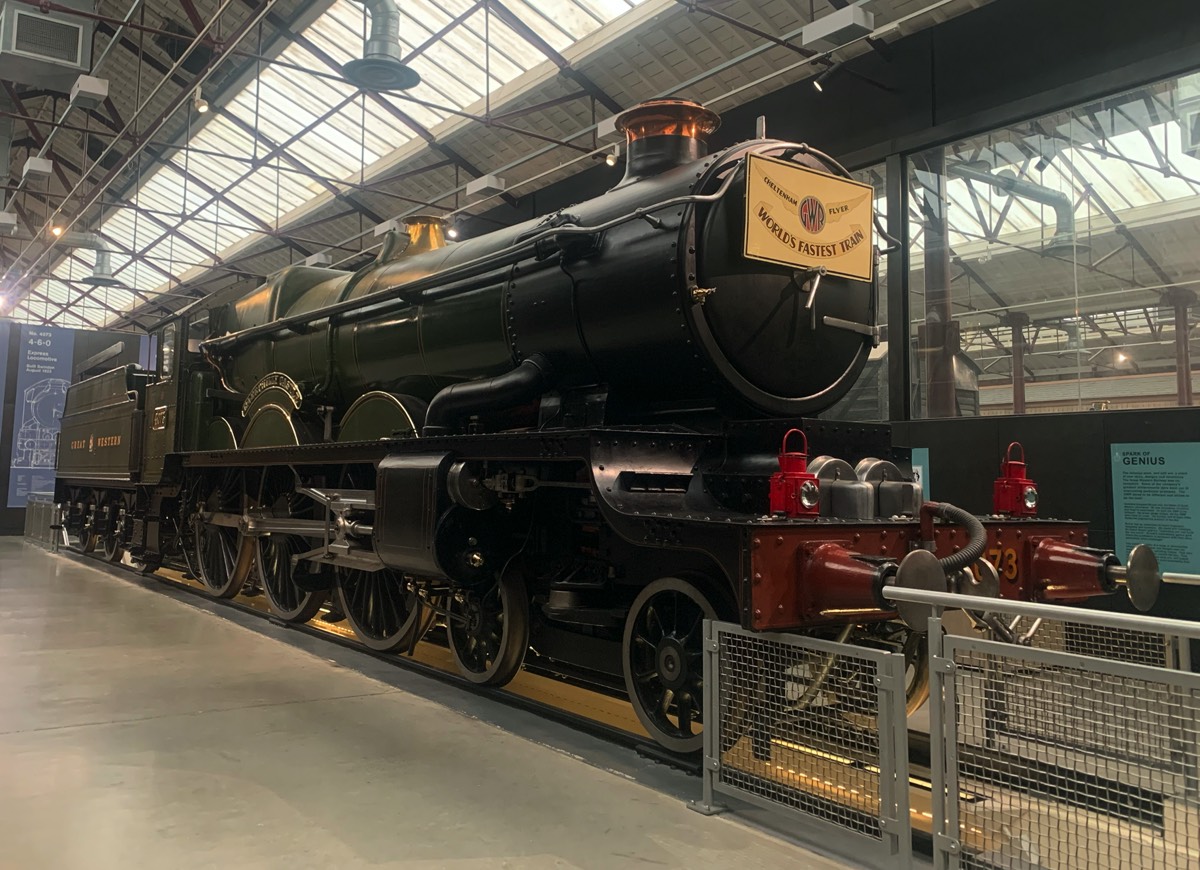
Caerphilly Castle locomotive (1923-1960).
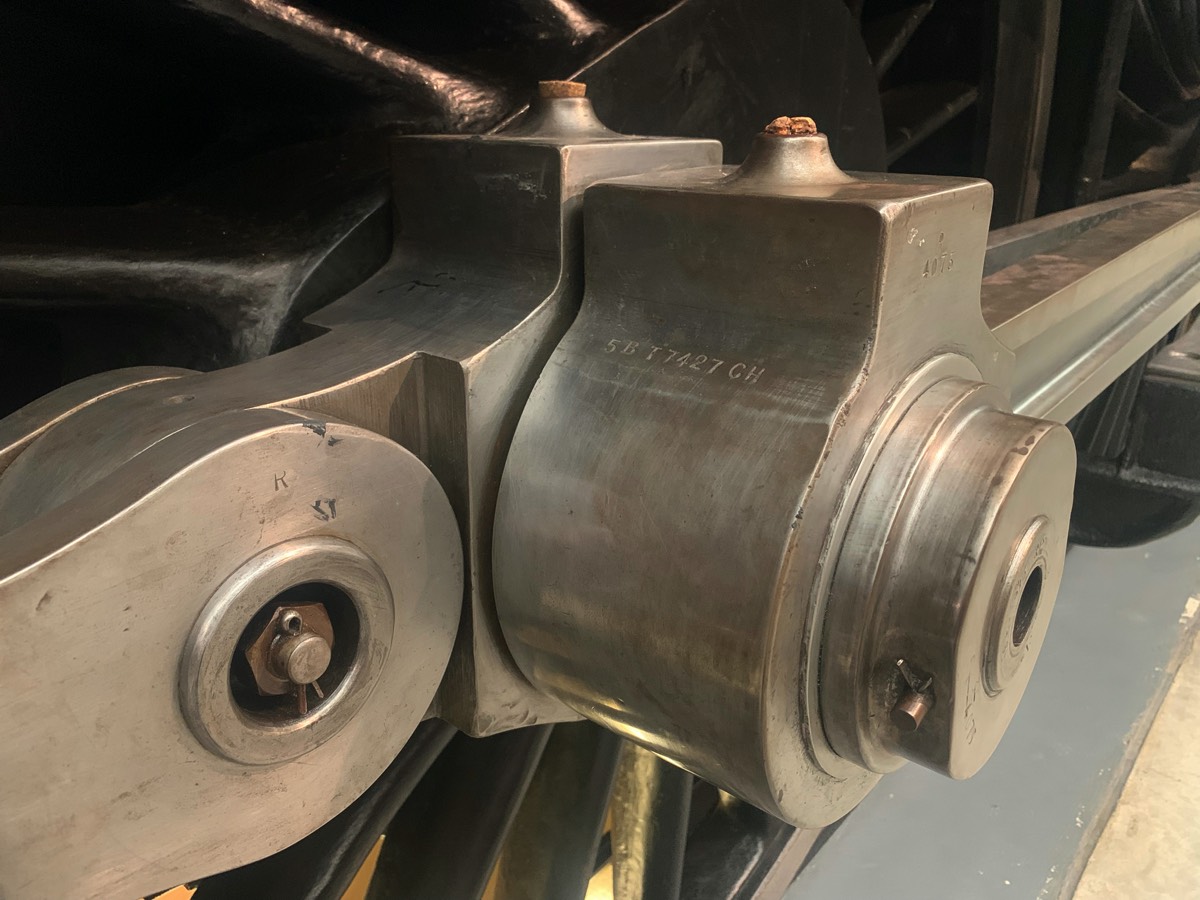
Note the 2 cotter pins & 2 cork stoppers.
It was the very close view of the enormous historic engine, the Caerphilly Castle, that captured my attention. This steam engine weighing an unimaginable 120 tons when fully loaded with coal and water, with gleaming paint and brass, relied on little cork stoppers and cotter pins to function. Incredibly, small, simple cotter pins held giant bolts in place. The world’s fastest engine in 1932 when it broke 82 mph, had a cork-stoppered reservoir that was undoubtedly filled by hand: such an amazing bit of old technology supporting tremendous power output. I couldn’t believe it. It was as startling as our first visit to the Smithsonian Air & Space Museum decades ago when we peeked inside one of the oldest space capsules to see toggle switches on the control panel. That was downright scary!
Thames River Experience
Walking almost two hundred miles along or near the banks of the Thames River was like we expected: pleasant, but not exceptional. Our trek quickly reminded me of why I generally prefer cyclotouring over hiking, which is because the pace of cycling is a closer match to our brain’s processing speed than is walking. In other words, I get bored if the world goes by too slowly.
Daily, we recited that our top priorities were being achieved: walking serious fitness miles (over 70 miles our first week) in a safe, wildfire-smoke-free environment in moderate weather. We’d been in England several times over the last 20 years and knew what to expect, which was pleasant people, most of whom we would generally understand; a familiar culture with a twist; expanses of green pastures and fields; a mild, marine climate; and a steady stream of curiosities, but we knew it wouldn’t be particularly stimulating. Scattered, disjointed bits of history are interesting, but ultimately, not very satisfying. But we were there to walk and walk we did. We were grateful that England supported readily accessible, long distance, day-hiking paths like the Thames Path, opportunities that don’t exist in the US.
I consider “being fascinated” wherever I am as an admirable skill that I am constantly honing, but there is a limit. Walking in forests with little focal distance didn’t provide a lot with which to be fascinated. I carefully studied the various latching systems on the gates to keep the cows in the proper fields so I could speedily and seamlessly negotiate each one. I admired the cows, noting how much wallowing in the mud that they had been doing based on the accumulations of muck on their rear ends.
Thames River Experience
Walking almost two hundred miles along or near the banks of the Thames River was like we expected: pleasant, but not exceptional. Our trek quickly reminded me of why I generally prefer cyclotouring over hiking, which is because the pace of cycling is a closer match to our brain’s processing speed than is walking. In other words, I get bored if the world goes by too slowly.
Daily, we recited that our top priorities were being achieved: walking serious fitness miles (over 70 miles our first week) in a safe, wildfire-smoke-free environment in moderate weather. We’d been in England several times over the last 20 years and knew what to expect, which was pleasant people, most of whom we would generally understand; a familiar culture with a twist; expanses of green pastures and fields; a mild, marine climate; and a steady stream of curiosities, but we knew it wouldn’t be particularly stimulating. Scattered, disjointed bits of history are interesting, but ultimately, not very satisfying. But we were there to walk and walk we did. We were grateful that England supported readily accessible, long distance, day-hiking paths like the Thames Path, opportunities that don’t exist in the US.
I consider “being fascinated” wherever I am as an admirable skill that I am constantly honing, but there is a limit. Walking in forests with little focal distance didn’t provide a lot with which to be fascinated. I carefully studied the various latching systems on the gates to keep the cows in the proper fields so I could speedily and seamlessly negotiate each one. I admired the cows, noting how much wallowing in the mud that they had been doing based on the accumulations of muck on their rear ends.
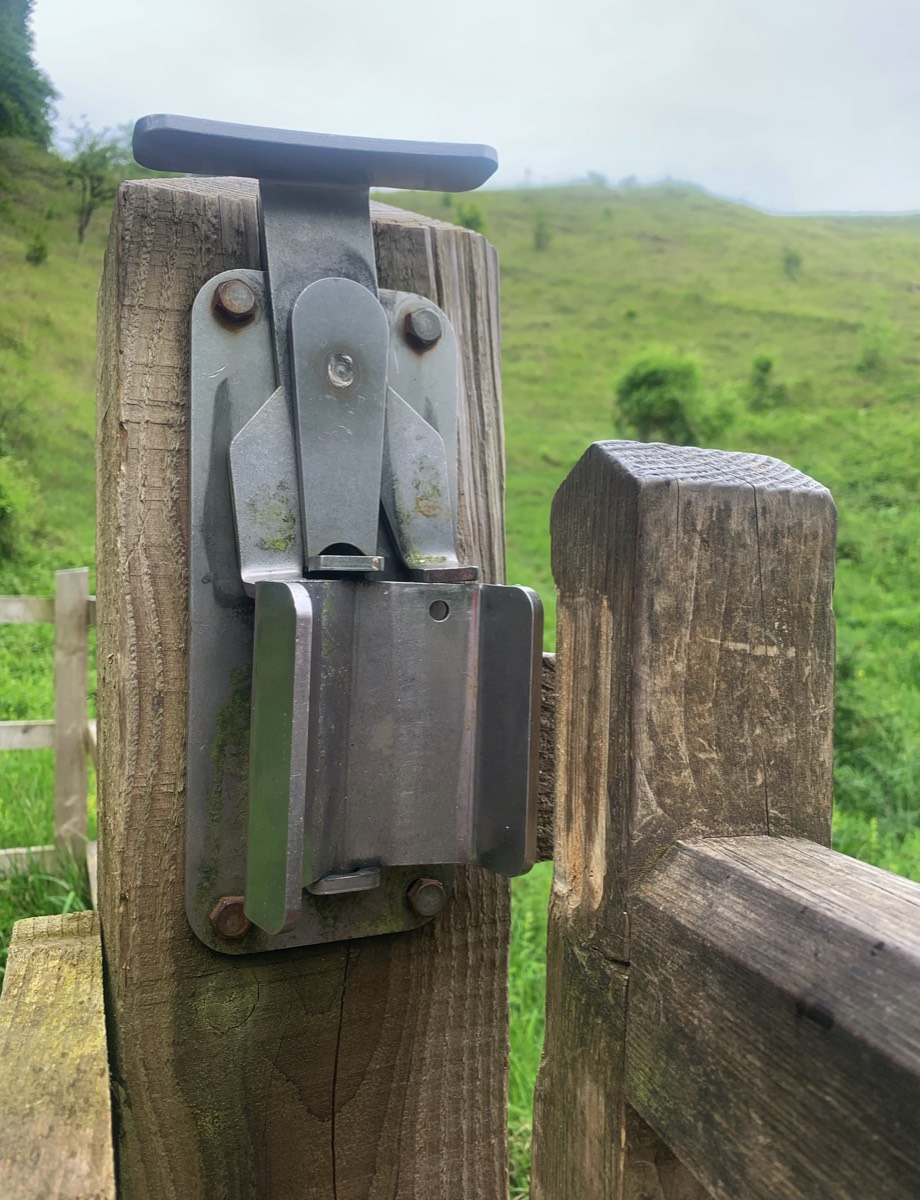
The most heavily engineered gate latch wasn’t on the Thames but on the 2nd day of our Cotswold Way walk.
We ogled homes and walls built using flint, which was precious for tool making a couple of thousand years ago, and mused at 2 blacksmiths still in business, one whose shop was in a canal boat. Roofing material changes in the villages didn’t escape us, with flat tiles variously being made from slate, terracotta, and wood, plus the occasional handsome thatched roof. Coming from the land of ‘stick houses,’ the brick and stone homes were eye-catching and pleasing to us. We wondered if the new houses were built on stilts because of global warming fears or were a nod to historical flooding.
The watercraft on the Thames ranged from hand-buffed, glamorous canal boats to “beater” boats that were practically floating junk yards. Wooden punts, sleek racing sculls, inflatable paddle boards, and cabin cruisers plied the waters along with 3 separate swimmers we spotted towing orange inflated bags that doubled as a cache for dry clothes and a buoy to mark their position in the water. We had no data to support our conclusions, but neither of us had enough faith in the water quality to be willing to swim in it ourselves.
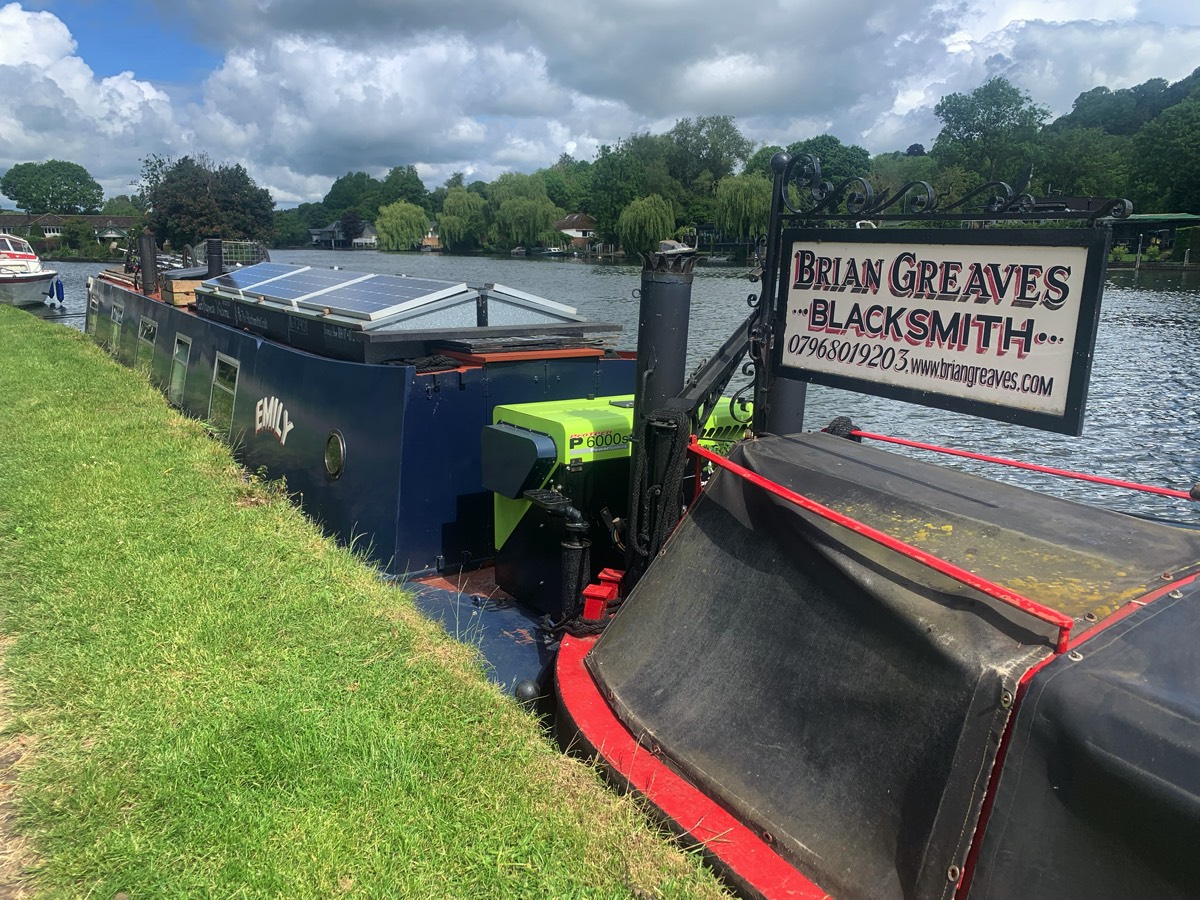
Canal boat blacksmith.
Covid infection rates had tanked when we arrived in the UK on May 6, just as rates were rising in the US. We quickly became at ease with the new reality. We did what we assumed we’d be doing for years at home, which was wearing medium-duty masks in markets, on public transportation, and in close quarters. Less than ¼ of the people around us wore masks in those spaces in the UK. We did let our masks down to our chins when few were around us, like on transport, where we frequently spent 2 to 4 hours a day.
We spent $20 to $80 a day on train and/or bus fares to connect the dots for our hub-and-spoke walking tour of the Thames. It made us gulp, but after steeling ourselves to the sticker shock a few days in a row, we ignored the cost. We were there to walk the Thames and though we didn’t know how expensive daily transport would be in advance, we knew it was the price of admission for the trip we were doing.
In addition to the out-of-pocket costs, Bill spent 30 minutes to an hour almost all days planning the transportation and refining the walking route to fit the reality of each day’s transit options. We used a total of 4 to 6 different trains and buses most days to get from our apartment to the trail to start a day’s walk and then to return home after walking about 10 miles. We used Uber on one particularly logistically challenging day.
It was still a draw: Is a hub-and-spoke model with several long-stays in apartments superior or is the through-hike model with daily luggage transfer, like we did on the Coast Path, better? The huge transportation overhead with the hub-and-spoke approach every day on buses and trains was time consuming and tiring but not having to pack our bags every day and having kitchens and clothes washing machines were wonderful.
Setting aside debating which was the superior trip planning model: we were suddenly dreaming about being in Germany when the government there announced a 3-month summer special of monthly train tickets for 9 Euros, a little over $10, for unlimited local and regional train use. It was a wildly expensive, seemingly impulsive move by the government, to ease the cost-of-living crisis. They had dropped the size of the fuel tax to help the general population, but the inequity of only aiding car owners caused a backlash, hence the eye-popping deal on the trains. Simultaneously, the ease of our travel in England was going to be diminished by rolling worker strikes on the rail lines over the summer. After our initial jealousy, we made peace with being happy for the lucky Germans and stayed with our planned itinerary in England.
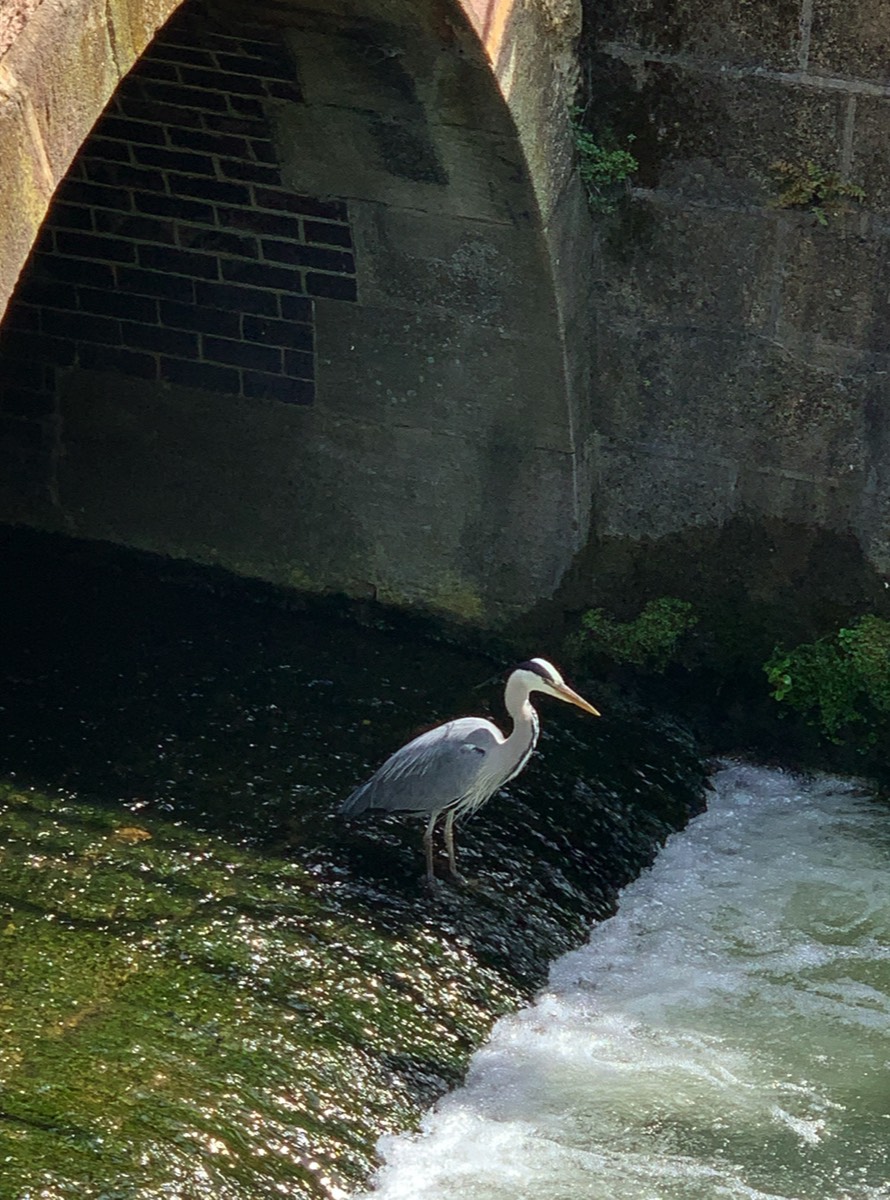
Known on FB as “Eddie Heron,” he dominates this choice fishing spot in Oxford for hours each day. He was rhythmically swallowing to digest breakfast, presumably an eel.
We walked 189 miles during the Thames Path National Trail segment of our 2022 walking tour of England over 20 days. We missed about 43 miles of the actual 185-mile path and added about an equal number of miles to our route to access the trail from the available transportation. Bill didn’t budget time to walk the path close to London, assuming we’d complete those stretches on future trips when flying through Heathrow.
Our annual fitness goal is to hike 2,000 miles a year, which is 40 miles a week all but 2 weeks of the year, and miles on pavement or mountain peaks look the same on our spread sheet, as did these ‘approach’ miles near the Thames. It was a flat route, with the elevation gain of some days being as little as 36’, equivalent to a few flights of stairs. Our total elevation gain for the 3 weeks was less than 2,000’, whereas we consider 10,000’ of elevation gain a stellar week.
We used tourist apartments in both Swindon and Maidenhead for 10 day-stays from which to launch our walking days using the hub-and-spoke model for long distance walking. We felt lucky to have walked for 3 weeks without having issues with ticks, which were an unexpected menace on the Coast Path several years ago, and there were no mosquitoes either. It rained some, but it didn’t define our experience on the Thames and the mud was manageable.
The Thames Path National Trail is one of 13 such paths in England and we are glad to have done it but aren’t likely to do again. However, Bill’s drive for completeness will keep those missing path segments near London on his “To Do” list for walking on future visits.
Next up, would be taking a short train ride to Cheltenham, the first of our 2 hubs for walking the 2nd of our 4 English venues, the Cotswold Way. Bristol would be our 2nd host city for the much-celebrated region.